It’s been a while since we’ve updated our blog and we apologize. We
are now into our 5th week here in Ethiopia and have been working
diligently as well as finally exploring another part of the country.
This past weekend we visited Langano, a lake about 3 hours outside of
Addis. Myself, Kate, Hanna, and our co-worker Fre all went together
and rented a car and driver, as none of us can drive here. We left
Saturday morning after a nice cup of coffee at the Ethiopian Starbucks
“Kaldis”. Leaving the city we were able to see another part of Addis
and begin to get a glimpse of the countryside. As our drive continued
we started driving through more rural Ethiopia. Houses along the road
were constructed in a traditional fashion with a circular base and
thatched roof top. Small boys and men with sticks walked alongside
the road herding cattle and sometimes donkeys or sheep. Lining the
road was an endless scene of small trees spaced out across the brown
earth. The deforestation that is occurring throughout Ethiopia has
caused the landscape to become barren as people cut down the trees for
firewood to cook their meals.
We are currently preparing for our trip to Jijiga and the camps in
the area. We were suppose to leave Thursday, however due to several
factors that contributed to resources not being available we have
changed our plane tickets last minute to Monday morning. We will be
in the Somali region of Ethiopia for 7 days and will be spending our
nights in Jijiga and traveling between Kebrebeyah, Awabere (Teferi
Ber), and Sheder refugee camps. We have a very busy schedule for our
week in the western part of the country and are implementing several
programs while we are in the refugee camps. We will first begin with
our emergency intervention to provide kerosene to refugees in Awabere
refugee camp, as UNHCR is highly in need of an organization to take on
this role.
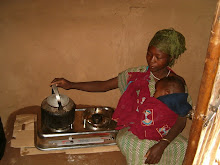
We had expected to be able to bring the kerosene stove we
chose from our efficiency testing; however, there are none in stock in
Addis, so we are going to continue the kerosene distribution without
them and implement the improved stoves at a later date. We are
planning to work with UNHCR to also distribute 25 parabolic solar
stoves each in Kebrebeyah, Awabere, and Sheder refugee camps. We will
distribute the stoves and provide training on how to use the stoves
properly. We will also be conducting an energy consumption survey in
the camps to investigate fuel consumption with charcoal, kerosene, and
ethanol stoves. This will help Gaia Association determine how much of
each fuel should be provided to the refugees depending on family size
and an estimated total energy consumption of the camps. We will also
be working to conduct controlled cooking tests in Kebreybeha and
Awabere to determine fuel consumption in the local setting.
We will provide cooks in the refugee camps with local food and ask them to
cook the food and we will gather all the necessary calculations to
look at fuel consumption within a given cooking time. At this time we
also will be measuring household and personal CO levels.
Along with all these tasks we plan to initiate a retained heat cooker
project in the two camps. We plan to distribute 10 haybaskets in
Kebreybeha camp along with the parabolic stoves and the other 20
baskets in Teferi Berr to be paired with the kerosene stoves. This
project is intended to cut cooking time by placing a hot pot with rice
or other food into a basket and letting it slowly cook, much like a
crock pot. We hope that there is a good response from the refugee
women, but it is a new project so we will see how they accept the
baskets.
We also will be talking to a local save the environment
organization and preparing a tree planting project for the refugees.
Another task will be to gather testimonials from the refugee families
regarding the CleanCook stove and ethanol interruption. We will use
these testimonials for Project Gaia and Gaia Association in order to
communicate with the public more about the refugees so others can get
a better glimpse of what their lives are like.
The trip to Jijiga will be a learning experience for all of us going
on the trip. We hope to complete most of our tasks and are prepared
to get a glimpse of development work at the grassroots level.
**disclaimer: My apologies for posting this late, Meg sent it to me but the email was lost in my spam-- here it is a little late but no worse for the wear! Megan and Kate are safely back after a busy and eventful trip... stay tuned for their post-trip musings...Brady
Wednesday, August 5, 2009

Saturday, June 27, 2009
Week 2 in Addis
More updates from Ethiopia! Where did we leave off? We have now been in Addis for 2 weeks, and time is moving incredibly fast! Our activities in the office have picked up as we are quickly trying to implement the kerosene stove dissemination into the refugee camps. Last week we accompanied Harry and Milkyas for a few hours to a demonstration of the CleanCook stove at the Hilton in Addis. Harry and Milkyas had been attending a conference on biofuels and had many inquiries about the functioning of the CC stove, so they decided to hold a demonstration. The demonstration at the Hilton went really well, and many biochemists and even an ambassador to Brazil attended to see the stove. Harry and Milkyas have been doing great work talking about the lack of ethanol in Ethiopia and are gaining some attention from high officials and other nations. We are currently investigating the possibility of getting ethanol from Sudan, and Harry is talking with ethanol producers in Sudan.
Throughout the week, we have been working mainly on testing various kerosene stoves in order to provide the refugees with the best burning stove. We have three options now: the one that most people use throughout the developing world, a small green stove produced in China, another Chinese stove that is very large and stable with 18 wicks, and a smaller Indian made stove. We are testing each of the stoves with a water boiling test and simmer test to see which stove is more appropriate. The water boiling test allows us to see how quickly each stove brings water to a boil, while the simmer test measures the amount of fuel burned. We are conducting each test three times on the stoves and are in the middle of the testing, and the office constantly smells of kerosene!! We will soon hopefully choose the best stove for our project, although not the stoves we want to be using, and talk to UNHCR to buy the stoves and the kerosene. As soon as this is done, we can travel to the refugee camps and implement our training program on using the kerosene stoves safely, as they are much more dangerous than ethanol stoves.
We have also been working on other small projects around the office including editing and discussing a video made for Project Gaia. We took the video to the UNHCR yesterday in order to have the public information manager review the video and make comments regarding changes.
Overall we have had a good glimpse of development work and the difficulties of trying to get the Ethiopian government to create a larger flow of ethanol. The government, like many other governments, has put all their effort with ethanol into fuel blending for cars. This means that petroleum is now mixed with ethanol, and no ethanol is left for household fuels. It is very difficult to convince the government to move resources that benefit the elites and provide the poorer communities with ethanol. We are trying to import the ethanol from Sudan, but that also proves to have obstacles because ethanol has never been imported for fuel in Ethiopia. There are many barriers, taxes, and ministries that are against the importation of ethanol and do not understand the necessity of ethanol as a household fuel.
Outside of work things have been going very well in Addis. The electricity seems to be getting worse as the guesthouse has only had power at night 1 out of the last 4 nights. Currently we are at the office and we are supposed to have electricity but the power just went out. It seems that days with electricity have been interrupted and are not fully powered, and we just hope that it doesn’t get worse. It’s very difficult to work when laptops can’t be charged! Last weekend we spent some time working in the office since there was no electricity at the house and met with Gaia’s business partner that is working on commercializing the stove. We also visited Addis Ababa University, which has an absolutely beautiful campus. It reminded me of a larger, Ethiopian version of Gettysburg College, with students chatting in the shade under trees. Our other stop for the weekend was the Merkato, which is said to be the largest market in Africa. Since we went on Saturday, we were caught in a frenetic crowd of people buying everything from spices to butter to clothes to mops. Being Project Gaia, we of course stopped to look what kinds of stoves are sold to the local people, but we also explored the spice market, where women sit enthroned on huge sacks filled with any kind of spice or incense you could imagine. You can just see those same spices being brought from China or India thousands of years ago. At the same time, of course, the Merkato is littered with cheap, imported plastic goods. It’s quite a contrast.
Now it’s the weekend again, so hopefully we can have some adventures and possibly go hiking and let you know how the view outside of Addis is!
Throughout the week, we have been working mainly on testing various kerosene stoves in order to provide the refugees with the best burning stove. We have three options now: the one that most people use throughout the developing world, a small green stove produced in China, another Chinese stove that is very large and stable with 18 wicks, and a smaller Indian made stove. We are testing each of the stoves with a water boiling test and simmer test to see which stove is more appropriate. The water boiling test allows us to see how quickly each stove brings water to a boil, while the simmer test measures the amount of fuel burned. We are conducting each test three times on the stoves and are in the middle of the testing, and the office constantly smells of kerosene!! We will soon hopefully choose the best stove for our project, although not the stoves we want to be using, and talk to UNHCR to buy the stoves and the kerosene. As soon as this is done, we can travel to the refugee camps and implement our training program on using the kerosene stoves safely, as they are much more dangerous than ethanol stoves.
We have also been working on other small projects around the office including editing and discussing a video made for Project Gaia. We took the video to the UNHCR yesterday in order to have the public information manager review the video and make comments regarding changes.
Overall we have had a good glimpse of development work and the difficulties of trying to get the Ethiopian government to create a larger flow of ethanol. The government, like many other governments, has put all their effort with ethanol into fuel blending for cars. This means that petroleum is now mixed with ethanol, and no ethanol is left for household fuels. It is very difficult to convince the government to move resources that benefit the elites and provide the poorer communities with ethanol. We are trying to import the ethanol from Sudan, but that also proves to have obstacles because ethanol has never been imported for fuel in Ethiopia. There are many barriers, taxes, and ministries that are against the importation of ethanol and do not understand the necessity of ethanol as a household fuel.
Outside of work things have been going very well in Addis. The electricity seems to be getting worse as the guesthouse has only had power at night 1 out of the last 4 nights. Currently we are at the office and we are supposed to have electricity but the power just went out. It seems that days with electricity have been interrupted and are not fully powered, and we just hope that it doesn’t get worse. It’s very difficult to work when laptops can’t be charged! Last weekend we spent some time working in the office since there was no electricity at the house and met with Gaia’s business partner that is working on commercializing the stove. We also visited Addis Ababa University, which has an absolutely beautiful campus. It reminded me of a larger, Ethiopian version of Gettysburg College, with students chatting in the shade under trees. Our other stop for the weekend was the Merkato, which is said to be the largest market in Africa. Since we went on Saturday, we were caught in a frenetic crowd of people buying everything from spices to butter to clothes to mops. Being Project Gaia, we of course stopped to look what kinds of stoves are sold to the local people, but we also explored the spice market, where women sit enthroned on huge sacks filled with any kind of spice or incense you could imagine. You can just see those same spices being brought from China or India thousands of years ago. At the same time, of course, the Merkato is littered with cheap, imported plastic goods. It’s quite a contrast.
Now it’s the weekend again, so hopefully we can have some adventures and possibly go hiking and let you know how the view outside of Addis is!
Friday, June 19, 2009
June 18th 2009
Kate and I are safely in Addis Ababa, adjusting to the time
difference and enjoying our new culture and surroundings. Our trip
started from the Dulles Airport, where we caught our first glimpse of
Ethiopia. The Ethiopian Airlines flight was about 90% Ethiopians, both
Ethiopian Americans and citizens. The flight began at 10:30am, and we
stopped for an hour pit stop in Rome while the crew changed and
cleaned the airplane. The flight then continued to Addis Ababa and we
arrived at 9:30am, 2:30am time back home. During the flight we were
able to see the sun rise over part of the Sahara desert in Libya,
which was amazing. As the sky began to lighten I thought for a minute
that we were flying over the moon. Not much light had filled the sky
yet, but I was able to make our large craters in the sand and sand
dunes. As the sun rose there was a breathtaking view of miles upon
miles of bare desert. The Nile River also came into view, and small
towns could be seen propped up along the riverside in the midst of the
dry desert. We then flew over Sudan, and Khartoum could be seen as a
massive extensive of tiny houses and small buildings in the desert.
As we approach Addis and made our descent, we could see patches of
farmland spread across the terrain and the mountains that back up to
the capital city.
After landing in Addis Ababa, we patiently waited in the visa line,
trying not to fall asleep, and headed out the airport to meet Milkyas
(Gaia Association’s Managing Director in Ethiopia) waiting for us. We
rode to the Guest House that Project Gaia owns, which is only 3
minutes away from the airport! Milkyas showed us around the guest
house, which is a very nice house and has 2 small bathrooms, 3
bedrooms, living room, and an indoor and outdoor kitchen (boasting
none other than the CleanCook stove, of course). The guest house is
in Bole, which is one of the nicest areas of Addis, but the widespread
poverty in Ethiopia is still very evident. Like many developing
countries, children sell gum on the street, and the Orthodox Christian
Church on the way to the office, which is a small village unto itself,
is lined with beggars and the homeless sitting against its walls.
After getting the house tour, Milkyas let us rest, and we showered
and slept for a bit before Hanna, PG’s other intern and Ethiopian
American, came to the Guest House and took us out for our first
Ethiopian coffee, which is great! We walked just down the road to a
new coffee shop and had our first macchiato (you can see obvious
evidence of Ethiopia’s Italian occupation in all the pizza, coffee
names, and pasta around Addis). Ethiopians love their coffee. It
comes in the morning, after lunch, and any other time you feel the
need. Needless to say, Kate has been drinking at least three cups a
day.
On Sunday, we got to try our first taste of Ethiopian food.
Ethiopian food, for those of you who haven’t tried it, is fantastic!
We ordered a variety of sauces to compliment the injera, and loved
them all, although we will probably stick to the spiciest. It has now
begun another fasting season, so meat and dairy products are not
suppose to be eaten, although we haven’t followed that rule so closely
yet. The two Fre’s, two of our new coworkers, met us for coffee;
they, along with everyone else at the office, are incredibly nice and
friendly, and we are really excited to work and hang out with them.
So far we have spent this week acclimating to the office and
discussing where we will be most useful in Gaia Association’s
projects. The Gaia projects with ethanol are currently at a
standstill due to the underproduction of ethanol by the government
producers. As Project Gaia is an implementing partner for the UNHCR,
we must continue to support the Somali refugees in the Kebribeyah and
Tefferi Ber camps because they no longer have any cooking fuel.
Without fuel, people cannot live, and women will again be forced to go
out of the camp to collect firewood in a deforested area. GA has been
asked to take over delivery of kerosene to the camps; while not the
cleanest or safest fuel, it is the best option at the moment that is
needed to help the refugees cook and survive. We are currently pushing
all of our efforts into choosing the best kerosene stove available, to
minimize pollution and increase safety, and distributing it, along
with kerosene, to the refugees in the camps.
The office is quite empty at the moment, however, as Fre Mengesha
left on Wednesday to work on a project in Madagascar until early July,
and Harry and Milkyas are presenting and attending a conference on
biofuels. Because of increasing urbanization, the electricity is cut
off about every other day, so we work from the guest house on the days
that the office has no electricity, which thankfully has electricity
on the opposite days as the office.
We will update everyone as the week goes on to let you know how work
and life in Ethiopia is going. The internet is incredibly slow on
days when we have electricity so please bear with us. We hope
everyone is doing well!
difference and enjoying our new culture and surroundings. Our trip
started from the Dulles Airport, where we caught our first glimpse of
Ethiopia. The Ethiopian Airlines flight was about 90% Ethiopians, both
Ethiopian Americans and citizens. The flight began at 10:30am, and we
stopped for an hour pit stop in Rome while the crew changed and
cleaned the airplane. The flight then continued to Addis Ababa and we
arrived at 9:30am, 2:30am time back home. During the flight we were
able to see the sun rise over part of the Sahara desert in Libya,
which was amazing. As the sky began to lighten I thought for a minute
that we were flying over the moon. Not much light had filled the sky
yet, but I was able to make our large craters in the sand and sand
dunes. As the sun rose there was a breathtaking view of miles upon
miles of bare desert. The Nile River also came into view, and small
towns could be seen propped up along the riverside in the midst of the
dry desert. We then flew over Sudan, and Khartoum could be seen as a
massive extensive of tiny houses and small buildings in the desert.
As we approach Addis and made our descent, we could see patches of
farmland spread across the terrain and the mountains that back up to
the capital city.
After landing in Addis Ababa, we patiently waited in the visa line,
trying not to fall asleep, and headed out the airport to meet Milkyas
(Gaia Association’s Managing Director in Ethiopia) waiting for us. We
rode to the Guest House that Project Gaia owns, which is only 3
minutes away from the airport! Milkyas showed us around the guest
house, which is a very nice house and has 2 small bathrooms, 3
bedrooms, living room, and an indoor and outdoor kitchen (boasting
none other than the CleanCook stove, of course). The guest house is
in Bole, which is one of the nicest areas of Addis, but the widespread
poverty in Ethiopia is still very evident. Like many developing
countries, children sell gum on the street, and the Orthodox Christian
Church on the way to the office, which is a small village unto itself,
is lined with beggars and the homeless sitting against its walls.
After getting the house tour, Milkyas let us rest, and we showered
and slept for a bit before Hanna, PG’s other intern and Ethiopian
American, came to the Guest House and took us out for our first
Ethiopian coffee, which is great! We walked just down the road to a
new coffee shop and had our first macchiato (you can see obvious
evidence of Ethiopia’s Italian occupation in all the pizza, coffee
names, and pasta around Addis). Ethiopians love their coffee. It
comes in the morning, after lunch, and any other time you feel the
need. Needless to say, Kate has been drinking at least three cups a
day.
On Sunday, we got to try our first taste of Ethiopian food.
Ethiopian food, for those of you who haven’t tried it, is fantastic!
We ordered a variety of sauces to compliment the injera, and loved
them all, although we will probably stick to the spiciest. It has now
begun another fasting season, so meat and dairy products are not
suppose to be eaten, although we haven’t followed that rule so closely
yet. The two Fre’s, two of our new coworkers, met us for coffee;
they, along with everyone else at the office, are incredibly nice and
friendly, and we are really excited to work and hang out with them.
So far we have spent this week acclimating to the office and
discussing where we will be most useful in Gaia Association’s
projects. The Gaia projects with ethanol are currently at a
standstill due to the underproduction of ethanol by the government
producers. As Project Gaia is an implementing partner for the UNHCR,
we must continue to support the Somali refugees in the Kebribeyah and
Tefferi Ber camps because they no longer have any cooking fuel.
Without fuel, people cannot live, and women will again be forced to go
out of the camp to collect firewood in a deforested area. GA has been
asked to take over delivery of kerosene to the camps; while not the
cleanest or safest fuel, it is the best option at the moment that is
needed to help the refugees cook and survive. We are currently pushing
all of our efforts into choosing the best kerosene stove available, to
minimize pollution and increase safety, and distributing it, along
with kerosene, to the refugees in the camps.
The office is quite empty at the moment, however, as Fre Mengesha
left on Wednesday to work on a project in Madagascar until early July,
and Harry and Milkyas are presenting and attending a conference on
biofuels. Because of increasing urbanization, the electricity is cut
off about every other day, so we work from the guest house on the days
that the office has no electricity, which thankfully has electricity
on the opposite days as the office.
We will update everyone as the week goes on to let you know how work
and life in Ethiopia is going. The internet is incredibly slow on
days when we have electricity so please bear with us. We hope
everyone is doing well!
Wednesday, June 10, 2009
Project Gaia: From Gettysburg to Ethiopia
Dear Family and Friends,
Less than twenty-four hours before we are due to leave (we have had a great stay up until now with Lisa Portmess and Harry in Gettysburg), neither Megan nor I are packed. We are, however, extremely excited to be interning with the Gaia Association in Ethiopia for the next two months. The Gaia Association works with Project Gaia Inc., a US non-profit, to promote clean cooking stoves and fuel; by doing so, they are able to increase air quality, prevent chronic respiratory diseases, and halt environmental degradation, to name a few things. One thing that attracted us to Project Gaia is how intricately so many issues tie together: health, gender, the environment, economics, and culture. So, Project Gaia and Gettysburg College have made it possible for us to undertake this fascinating internship and learn more about both energy and health and the people, landscape, and culture of Ethiopia. We recently learned that ping pong is quite popular in Ethiopia, so we will even be able to continue our ping pong conquests (or at least Megan will).
We hope to use this blog as a forum for our experiences and a place to share the many challenges and wonders we encounter. So, if you are interested in our injera eating, trips to refugee camps, biofuel, excellent coffee, and the many other things to come, keep reading over the next two months we hope to update the blog as much as possible!
Thanks again to everyone for making this trip possible.
Visit Project Gaia on the web to see more about the organization. A new version will be coming in July 2009!
projectgaia.com
Less than twenty-four hours before we are due to leave (we have had a great stay up until now with Lisa Portmess and Harry in Gettysburg), neither Megan nor I are packed. We are, however, extremely excited to be interning with the Gaia Association in Ethiopia for the next two months. The Gaia Association works with Project Gaia Inc., a US non-profit, to promote clean cooking stoves and fuel; by doing so, they are able to increase air quality, prevent chronic respiratory diseases, and halt environmental degradation, to name a few things. One thing that attracted us to Project Gaia is how intricately so many issues tie together: health, gender, the environment, economics, and culture. So, Project Gaia and Gettysburg College have made it possible for us to undertake this fascinating internship and learn more about both energy and health and the people, landscape, and culture of Ethiopia. We recently learned that ping pong is quite popular in Ethiopia, so we will even be able to continue our ping pong conquests (or at least Megan will).
We hope to use this blog as a forum for our experiences and a place to share the many challenges and wonders we encounter. So, if you are interested in our injera eating, trips to refugee camps, biofuel, excellent coffee, and the many other things to come, keep reading over the next two months we hope to update the blog as much as possible!
Thanks again to everyone for making this trip possible.
Visit Project Gaia on the web to see more about the organization. A new version will be coming in July 2009!
projectgaia.com
Subscribe to:
Posts (Atom)